Where sound absorption matters
Noise problems look different in every industry, but the question is often the same: how much sound does this structure absorb, and at which frequencies? We answer it from your CAD file, for perforated panels, resonators, lattices and metamaterials alike.
What we simulate
For any sound-absorbing structure you can send as CAD, we simulate it in a virtual impedance tube and report:
Absorption coefficient α(f)Surface impedance Zs(f)Reflection R(f)Porosity φTransmission loss TL(f)
That makes it quick to compare many design variants for your application and build only the best ones.
Industries and examples
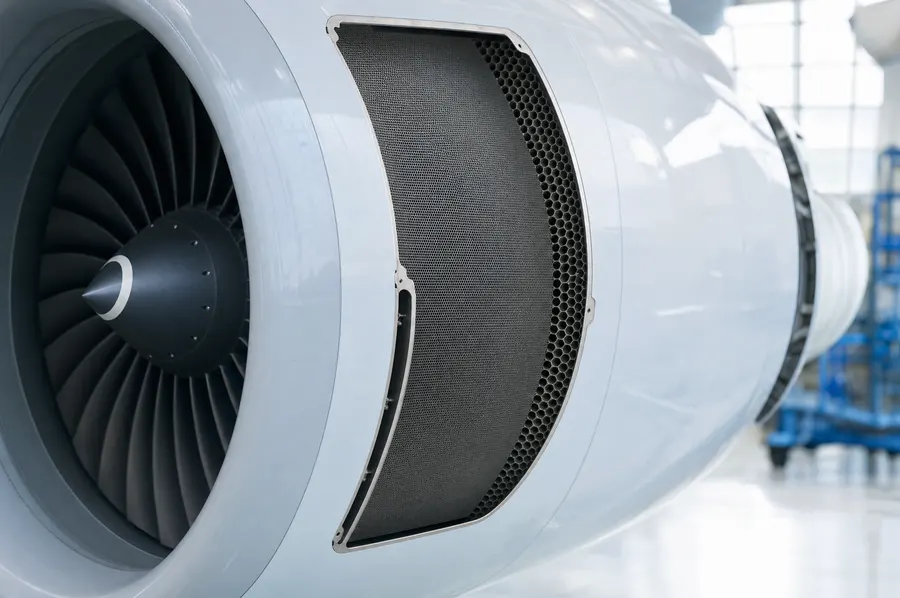
Aircraft engines
Fan noise from jet engines has both a steady hum and sharp tones. Panels lining the inside of the engine nacelle absorb part of it, and they have to stay thin and light.
We predict how a liner cell or panel absorbs sound across frequency, so you can tune it to the tones that matter before printing test samples.
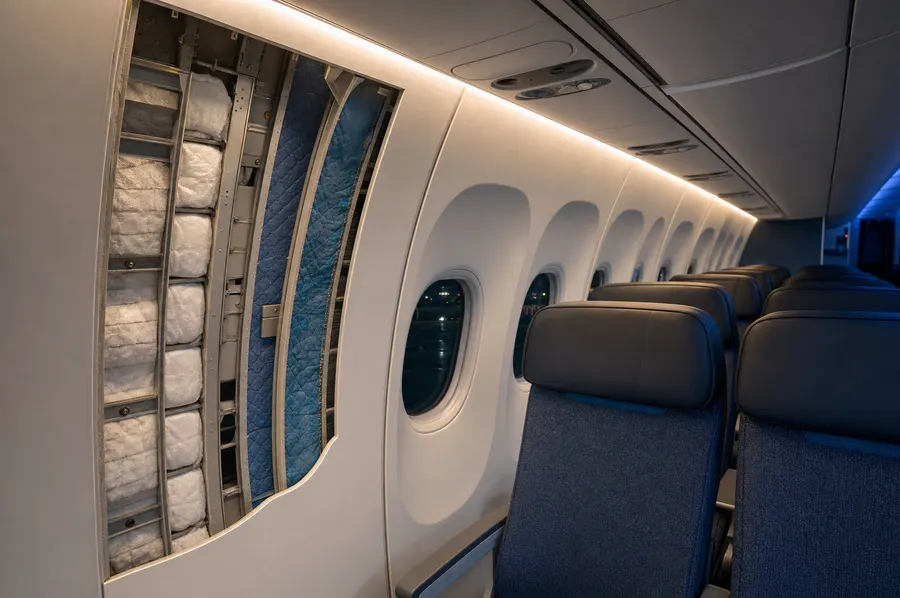
Aircraft cabins
Much of the noise passengers hear is low-pitched, below a few hundred hertz, where classic insulation blankets need a lot of thickness and weight to help.
Resonators and metamaterials can target those low frequencies in a thin package. We show how much each design absorbs, so you can weigh absorption against mass and thickness.

Air taxis and drones
Electric air taxis and drones fly close to people, so how they sound matters for acceptance. Their ducted fans leave little room or weight for treatment.
Simulated absorption curves let you compare liner concepts for a particular fan on equal terms.
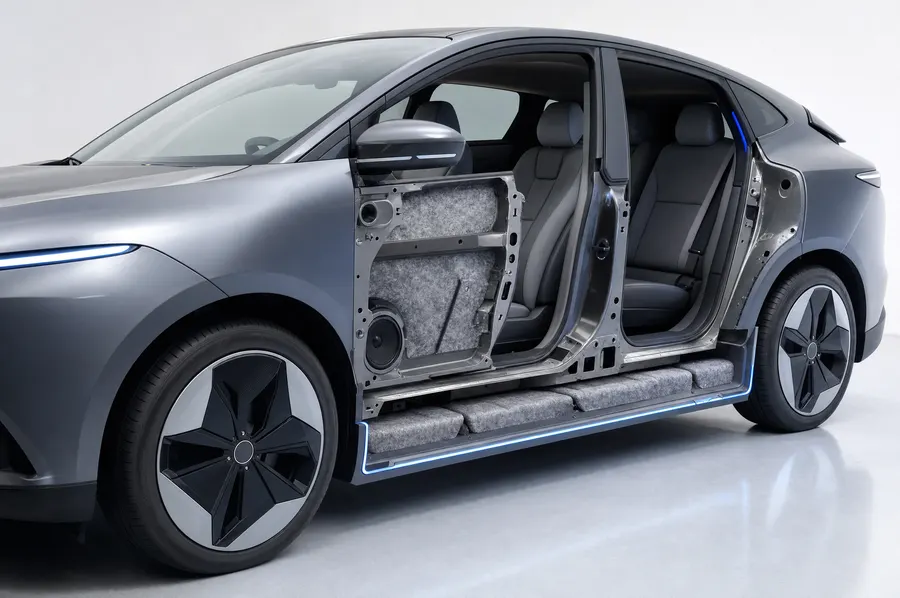
Electric and conventional vehicles
Without an engine to mask them, electric cars reveal other sounds: compressors, road and wind noise from underneath the car. Many of these sit in the low and mid range where light foams struggle.
We simulate absorption and transmission loss of resonator panels, lattices and silencer elements for doors, floors, battery covers and exhaust or intake systems.
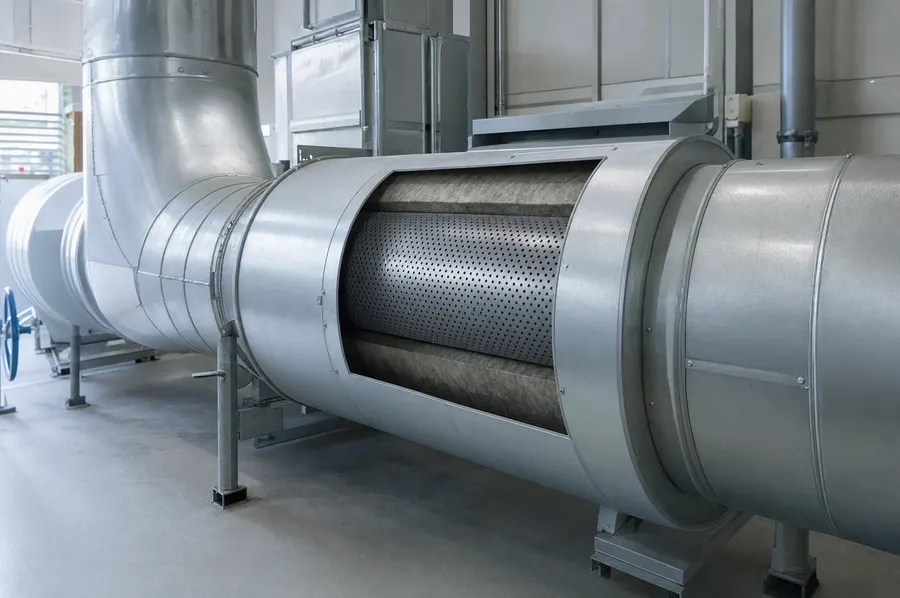
Ventilation ducts and silencers
Fan and airflow noise travels along ducts into every room. Silencers have to quieten it without blocking the air.
Perforated and micro-perforated liners can be tuned and are durable. We simulate absorption and transmission loss of duct-lining and silencer elements early in the design.
Rail
Trains squeal on tight curves, and passengers hear noise from the wheels and equipment inside the cabin.
Trackside barriers and cabin panels with perforated or resonant designs can be compared before anything is built.
Buildings and rooms
Offices, studios and public spaces need absorbing panels that look good and still work at low frequencies.
We help you shape a 3D-printed or perforated panel design. Building ratings use a different test (reverberation room), so treat our results as a design tool.
Machinery and products
Pumps, compressors, loudspeakers and household appliances often make noise in more than one frequency band.
Enclosure linings and internal absorbers can be tuned for several bands at once. Simulation shows whether a design hits all of them.
Why designers are moving to engineered absorbers
Foams and fibres work well at higher frequencies, but low-pitched or tonal noise, tight space and weight limits, heat, moisture and cleaning all push designers towards structures whose shape does the work: perforated panels, resonators, lattices and metamaterials. Their big advantage is that the absorption can be tuned to the noise you actually have. Tuning means trying many shapes, and that is exactly what a virtual tube makes fast and affordable.
Images are illustrations.